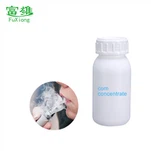
A large amount of solvents are used in the preparation of flavors, and their total amount is even more than spices, especially food flavors. The solutions often reach more than 90%. Therefore, the selection of solvents is also often considered "perfume costs". This article describes the advantages and disadvantages and applicable areas of ethanol, propylene glycol, alcohol, phthalinate, and even water as fragrance solvents. I hope to help and inspire you in the practice of fragrance.
Water quality edible flavors use a large amount of ethanol (alcohol), which is pronounced and easy to be pronounced. The solubility of various spices can be "guided" that these spices can dissolve in the water, but ethanol also has disadvantages. It is easy to volatilize and escape, and sometimes causes the phenomenon of turbidity, precipitation, discoloration, collagen and other phenomena due to losing part of ethanol; secondly, some drinks and foods are not allowed to add ethanol; there is also a problem of "consumption tax" -in many countries in many countries And regional (including my country), they are heavy taxes for ethanol classes -causing a large amount of cost of using ethanol. Therefore, in recent years, the amount of ethanol for food flavors has been declining, and several alcohol solvents replaced have not only retained the superior performance of ethanol, but also overcomes its unfavorable aspects. Among them, the most "outstanding" is propylene glycol.
The price of propylene glycol is also low. Although the manufacturing cost is higher than that of ethanol, it does not have the problem of "consumption tax", which makes its price sometimes similar to the ethanol after taxation. Pateyl alcohol is not easy to volatilize, non -toxic and odor, and the physical and chemical performance is ideal, but there are many spices in propylene glycol, especially incense, ethylla, and larobide (sweet orange orange orange orange orange orange orange orange. The main ingredients of oil), etc. At this time, some ethanol can be replaced by propylene glycol, which can often "start to die", so that the flavors can be restored to clarify and transparent uniform body again.
Diabenate is the most commonly used solvent for daily chemical flavors. It has no color and odor, not sticky, and has a good solubility for most spices. If a large amount of solid spices such as cotton, fragrant beanin, jasmine, and various synthetic musk are used in the fragrance formula, you can add di ethyl achinic acid to the Frozen, crystallization or turbidity appears. Some illegal merchants often use a lot of diluted fragrances with dilutes of dihydrite. Buyers often can't see it for a while, and they can't smell it. When they use it, they find that the aroma is not enough. Qi color spectrum method is the best way to detect whether the flavors are blended with a large amount of solvents (especially alignate (di ethyl acetate), and it is easy for the operator to recognize its characteristic peak. Some people think that although di ethylicate is not fragrant, it may have a fixed fragrance because it has a high boiling point. Practice has proved that there is no fragrance effect of di ethyl -ethylicate. The scent of the ethyl of phthalate was covered with smelling fragrance. There is no fragrance when ethyls start to volatilize, which is completely different from fixed fragrances such as phenyl azoate.
Generally, flavors cannot be added, but some "water quality" edible flavors, especially early formulas, contain a certain amount of water. The esters composed of many low -carbonate and low -carbon alcohols and ethyl maltophenol, citron, and lower molecular amount of alcohol content Aldehyde, ketone, acid, etc. have a certain degree of solubility in the water, and more importantly, they can be dissolved in 10%to 90%ethanol. Adding an appropriate amount of water to water quality can reduce the volatileness of ethanol, reduce the cost of formula, and allow the flavor to dissolve in water quickly when used. In precipitation, the turbidity of "water quality" and crystallization at the bottom often occur in winter. Therefore, the amount of water added to these formulas must be thoroughly calculated, experimented, and observed to be determined. Nowadays, the incense regulator tends to not use water, and does not like to divide any water and oil flavors.
The so -called oil -consuming fragrance is to dilute the fragrance with a large amount of tea oil, peanut oil, soybean oil, color lotus oil, and palm oil. Usually these oils are not high, and they have a certain amount of fragrance for fragrance. Oil -quality edible flavors can be used on the so -called "hot food" such as candy, biscuits, pastries, and bread, but these oils are limited. Many solid spices are not easily dissolved in fats. It is necessary to add anti -oxidant to save it for a long time. The safety of chemical synthesis antioxidants is often questioned. The cost of natural antioxidants is too high, so the oily edible flavors in the market today are also declining. Most of the food fragrances abroad use a large amount of propylene glycol as the so -called water, oil -based flavors of the solvents, or common food flavors.